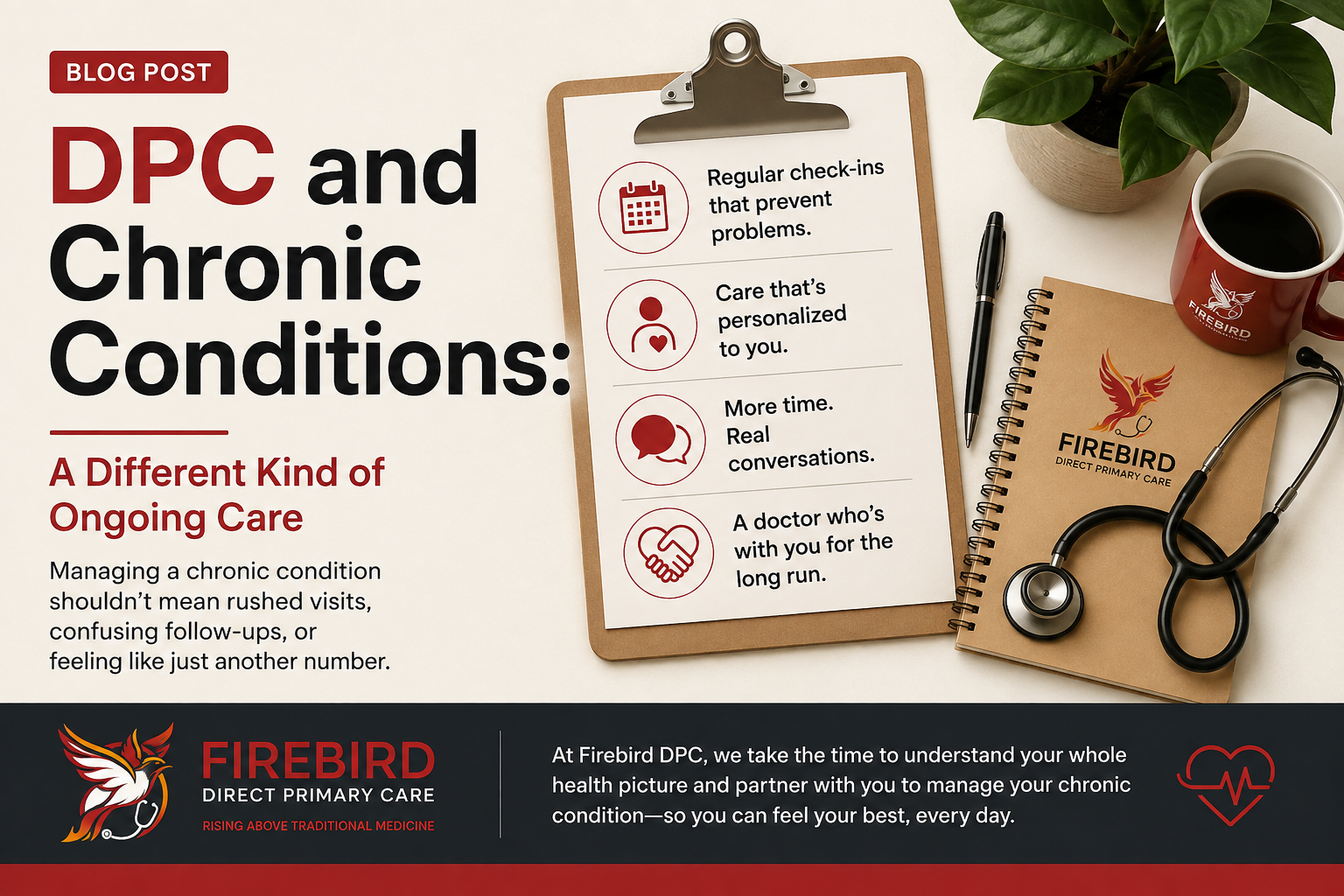
For people managing chronic health conditions — hypertension, diabetes, thyroid disorders, autoimmune conditions, high cholesterol, chronic pain, and many others — the primary care relationship isn't occasional. It's ongoing. And the quality of that relationship has a direct effect on health outcomes. This is where the DPC model's structural advantages become most apparent. The Problem With Chronic Care in Traditional Settings Managing a chronic condition well requires consistency, time, and communication. In a traditional primary care setting, all three are often in short supply. Consistency is undermined when you can't get timely appointments and end up seeing whoever is available. Time is constrained by a 10–15 minute visit structure that barely accommodates a review of labs and a prescription refill, let alone a thoughtful conversation about how you're actually doing. Communication between visits is often channeled through a phone tree or patient portal with days-long response times. This isn't a criticism of the physicians working in these settings. It's a structural problem. When a doctor is responsible for 2,000 patients and billing drives the pace, chronic disease management suffers. How DPC Changes the Equation In a DPC practice, your physician has a small enough patient panel to actually know you. Not your chart — you. Your work schedule, your stress levels, your adherence challenges, your preferences, your goals. This matters enormously for chronic disease management. When your doctor knows you, they're better positioned to catch early changes, to have honest conversations about what's working and what isn't, and to adjust plans in response to your real life rather than your most recent data point. The access piece matters too. If you're managing a condition and something changes — your blood pressure readings at home are concerning, a side effect is bothering you, you're not sure whether a new symptom is related — being able to send a message and get a timely, personal response from your physician changes how you manage between visits. Labs and Medication Costs One of the practical advantages of DPC for people managing chronic conditions is access to wholesale-priced labs. Conditions that require regular monitoring — diabetes, thyroid disorders, kidney function, cholesterol — can generate significant lab expenses under traditional insurance billing. DPC practices typically offer these at dramatically reduced cost. Some DPC practices also help members access generic medications at reduced prices, which can meaningfully affect the affordability of ongoing treatment. The Bottom Line Chronic conditions are best managed with a physician who has time, who knows you, and who is accessible between visits. The DPC model is designed around exactly that. If you're managing an ongoing health condition and feel like your current care doesn't reflect that level of relationship, the conversation is worth having. ───────────────────────────────────────────────────── Schedule a Free Meet & Greet Ready to experience primary care that puts you first? Firebird Direct Primary Care offers transparent membership-based care with no insurance hassles, same-day appointments, and a physician who actually has time to listen. Schedule a free meet-and-greet at www.firebirddpc.com or call us at (614) 259-7987. ───────────────────────────────────────────────────── DISCLAIMER DISCLAIMER: The information provided in this blog post is intended for general educational and informational purposes only. It does not constitute medical advice, diagnosis, or treatment, and should not be used as a substitute for professional medical consultation, diagnosis, or treatment by a qualified, licensed physician or other healthcare provider. Always seek the advice of your doctor or another qualified health professional with any questions you may have regarding a medical condition or health concern. Never disregard professional medical advice or delay seeking it because of something you have read on this website. Firebird Direct Primary Care makes no representations or warranties of any kind, express or implied, about the completeness, accuracy, reliability, or suitability of the information contained in this blog post. Reliance on any information appearing on this site is solely at your own risk
Firebird DPC Blog
DPC and Chronic Conditions: A Different Kind of Ongoing Care
DPC and Chronic Conditions: A Different Kind of Ongoing Care