How much can your family doctor handle?
Primary care is designed to be the first place you turn for many health concerns.
A family physician can evaluate new symptoms, manage chronic conditions, provide preventive care, review medications, order and interpret testing, perform selected office procedures, and help determine when specialty care is necessary.
At Firebird Direct Primary Care in Worthington, Ohio, the goal is not to keep every medical problem in the primary care office.
The goal is to handle appropriate problems in primary care while helping patients reach the right level of care when something more is needed.
Common illnesses and new symptoms
Many new symptoms can begin with a family physician.
Depending on the situation, primary care may evaluate concerns such as:
- Cough and respiratory symptoms
- Sore throat
- Ear and sinus symptoms
- Fever
- Urinary symptoms
- Rashes
- Headaches
- Abdominal or gastrointestinal symptoms
- Back and joint pain
- Sprains and strains
- Minor wounds
- Fatigue
- Dizziness
- Other new or unexplained symptoms
An evaluation does not always end with treatment in the primary care office.
Sometimes the most important thing a family physician does is recognize when a symptom needs imaging, emergency evaluation, or specialty care.
Chronic medical conditions
Family physicians also manage many ongoing medical conditions.
Examples may include:
- High blood pressure
- Diabetes and prediabetes
- High cholesterol
- Weight concerns
- Asthma and other common respiratory conditions
- Anxiety
- Depression
- Thyroid disorders
- Other common chronic health problems
Chronic disease management often involves more than prescribing medication.
It may include monitoring symptoms, reviewing laboratory trends, adjusting medications, discussing lifestyle changes, and deciding when additional testing or specialty consultation is appropriate.
Preventive care
Some of the most important work in family medicine happens before a serious problem develops.
Preventive primary care can include:
- Annual physical examinations
- Blood pressure screening
- Diabetes screening
- Cholesterol assessment
- Cancer screening discussions
- Medication review
- Vaccination review
- Cardiovascular risk assessment
- Lifestyle counseling
- Age-appropriate preventive planning
The appropriate recommendations depend on the individual patient's age, medical history, family history, risk factors, and previous testing.
Laboratory testing and blood draws
Laboratory testing can often be coordinated through primary care.
Firebird DPC can perform blood draws in the office and provide access to lower-cost laboratory testing when appropriate.
More importantly, laboratory results can be interpreted alongside your symptoms, medications, medical history, and previous results.
A laboratory value rarely tells the entire story by itself.
Minor wounds and suturing
Some cuts and wounds can be treated in a primary care office.
Depending on the location, severity, contamination, timing, and possibility of deeper injury, treatment may include cleaning the wound and simple suturing.
Other wounds require an emergency department or another facility, particularly when there is significant bleeding, major contamination, possible tendon or nerve injury, severe trauma, or another complication.
Joint injections
For selected musculoskeletal conditions, a joint injection may be one component of treatment.
Before performing an injection, the underlying problem needs to be evaluated.
Not every painful joint should be injected, and some conditions are better managed with medication, physical therapy, imaging, orthopedic evaluation, or another approach.
When clinically appropriate, selected joint injections can be performed at Firebird DPC.
Skin procedures and biopsies
Primary care can also evaluate many common skin concerns.
When appropriate, selected simple dermatologic procedures or biopsies may be performed in the office.
A biopsy can help establish a diagnosis, but suspicious or complex lesions may require dermatology or another specialist.
The decision depends on what is found during the examination.
Osteopathic manipulative treatment
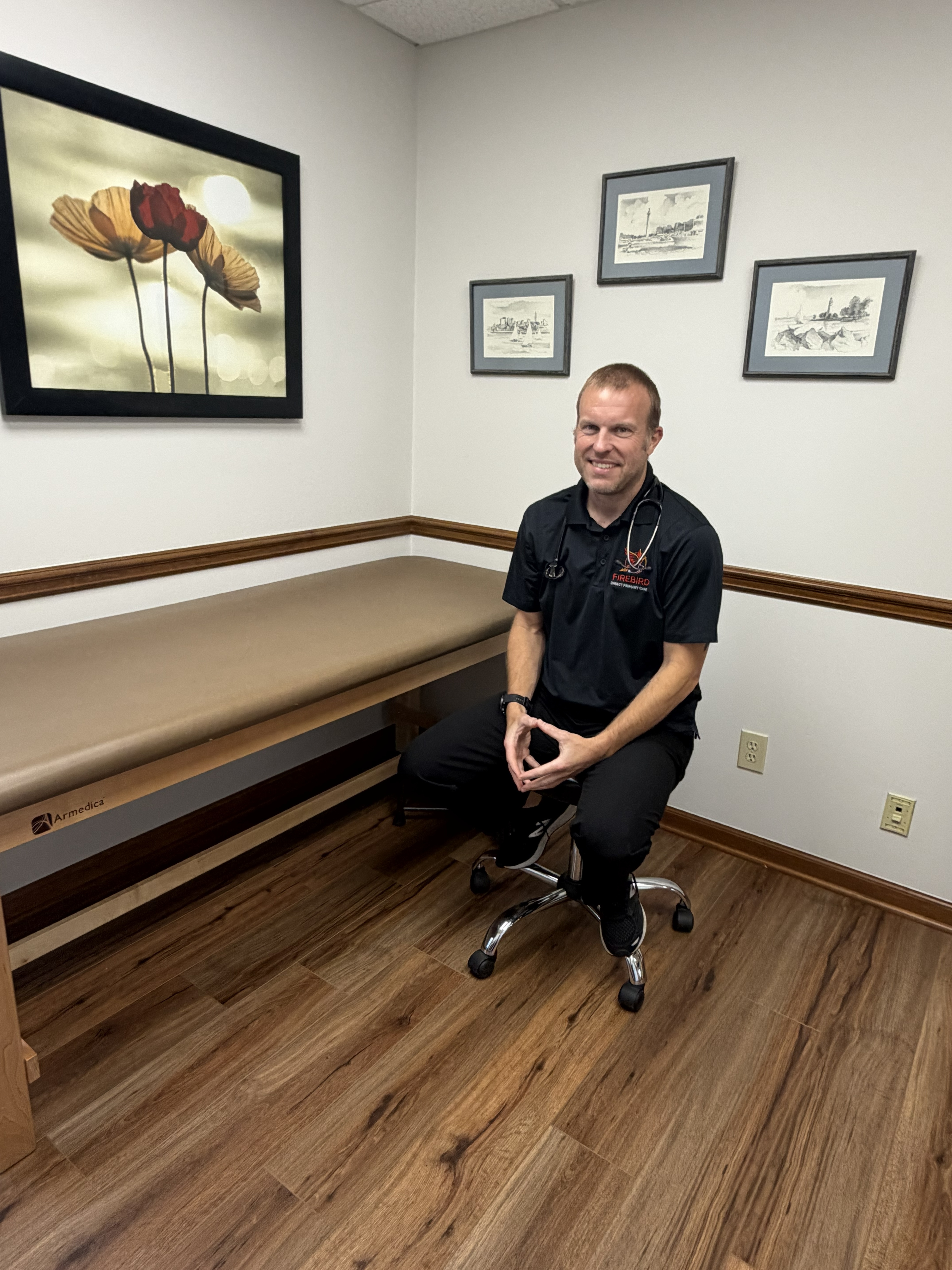
As an osteopathic physician, Dr. Mark Hagen may incorporate osteopathic manipulative treatment, or OMT, when appropriate.
OMT uses hands-on evaluation and treatment of the musculoskeletal system as one possible part of a patient's overall care.
It is not appropriate for every problem and does not replace imaging, medication, physical therapy, specialist evaluation, or other treatment when those are indicated.
Medication management
New symptoms can sometimes be related to medications patients are already taking.
Family medicine includes reviewing prescription medications, over-the-counter products, supplements, possible side effects, interactions, and whether a medication is still appropriate.
Having one physician who knows the broader medication list can be particularly useful when several conditions are being treated at the same time.
When is a specialist still necessary?
Primary care is not intended to replace specialists.
Referral may be appropriate when a condition requires expertise, testing, treatment, or procedures beyond what can reasonably be provided in a family medicine office.
Examples may include:
- Complex or uncertain diagnoses
- Conditions requiring surgery
- Certain heart or neurologic problems
- Complex orthopedic conditions
- High-risk skin lesions
- Specialized cancer evaluation or treatment
- Advanced diagnostic procedures
- Problems that have not responded to appropriate initial treatment
A referral does not mean primary care has failed.
Knowing when to involve a specialist is part of good primary care.
Primary care can remain involved after a referral
Seeing a specialist does not have to end the primary care relationship.
Your family physician can continue managing other medical conditions, reviewing medications, following laboratory results, and helping put specialist recommendations into the context of your overall health.
That continuity becomes increasingly important when several physicians are involved in someone's care.
Family medicine in Worthington, Ohio
Firebird Direct Primary Care provides physician-led family medicine in Worthington for patients from Worthington, Columbus, and surrounding Central Ohio communities.
The goal is comprehensive first-contact care—not trying to do everything in one office.
When a problem belongs in primary care, we want to handle it there. When it does not, we help determine the appropriate next step.
Explore primary care services at Firebird DPC, learn how direct primary care works, or schedule a free Meet & Greet.