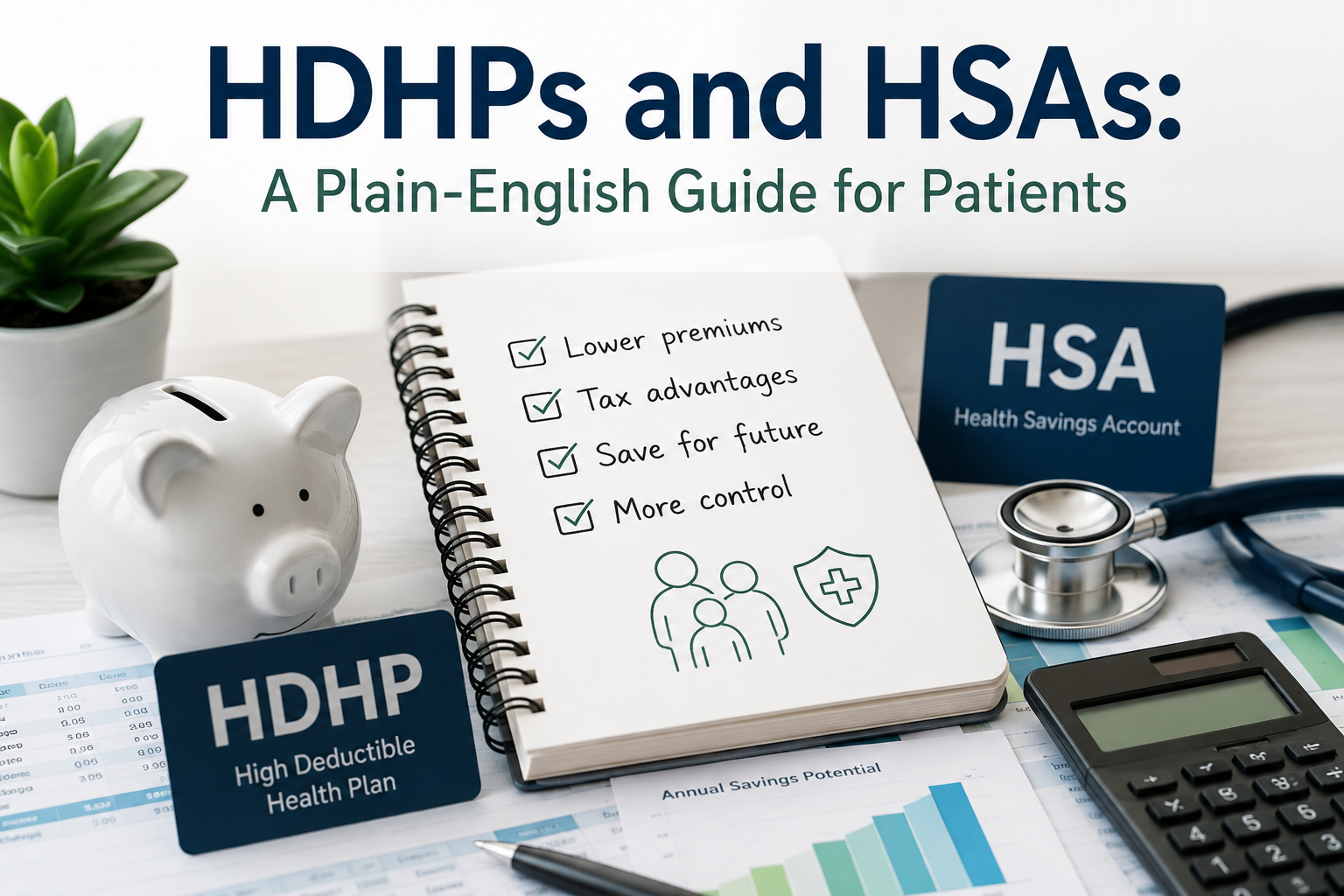
If you've ever compared health insurance options and felt your eyes glaze over somewhere between "deductible" and "out-of-pocket maximum," you're not alone. Health insurance is genuinely complex — often by design. Two terms that come up frequently for people exploring alternatives to traditional insurance coverage are HDHP (High-Deductible Health Plan) and HSA (Health Savings Account). Here's a plain-English overview. What Is an HDHP? A High-Deductible Health Plan is a type of health insurance characterized by lower monthly premiums and higher deductibles compared to traditional plans. The IRS sets minimum deductible thresholds that define what qualifies as an HDHP; these thresholds are updated periodically. In practical terms: you pay less each month, but you're responsible for more out-of-pocket costs before your insurance coverage kicks in fully. HDHPs are typically paired with catastrophic coverage — meaning they protect you against major medical events (hospitalization, surgery, serious illness) while leaving routine care largely in your hands. What Is an HSA? A Health Savings Account is a tax-advantaged account that allows individuals enrolled in a qualifying HDHP to set aside pre-tax money for qualified medical expenses. The tax advantages are significant: contributions are tax-deductible, growth within the account is tax-free, and withdrawals for qualified medical expenses are also tax-free — a "triple tax advantage" that few other savings vehicles offer. Funds in an HSA roll over year to year — there's no "use it or lose it" rule as with Flexible Spending Accounts (FSAs). Over time, HSAs can accumulate into a meaningful healthcare reserve, and after age 65, funds can be withdrawn for any purpose (with ordinary income tax, like a traditional IRA). How DPC Fits In This is where it gets particularly relevant for those considering Direct Primary Care. Many patients pair a DPC membership with an HDHP. The DPC membership handles the primary care they use regularly — without deductibles, copays, or insurance involvement. The HDHP protects them against major medical events. The combination often results in lower total healthcare spending than a traditional comprehensive plan, with significantly better primary care access. A note of caution: HSA rules and whether a DPC membership qualifies as an eligible HSA expense is a nuanced question that has evolved and varies. We strongly encourage consulting with a tax advisor or financial professional for guidance specific to your situation. This is general informational content, not tax or financial advice. Is This the Right Approach for You? That depends on your health status, how frequently you use medical care, your financial situation, and your risk tolerance. People with ongoing significant medical needs may find that a comprehensive plan with lower out-of-pocket costs per service is more appropriate, even with higher premiums. The key is making the comparison with actual numbers rather than assumptions — and ideally, with the guidance of someone who can review your specific situation. ───────────────────────────────────────────────────── Schedule a Free Meet & Greet Ready to experience primary care that puts you first? Firebird Direct Primary Care offers transparent membership-based care with no insurance hassles, same-day appointments, and a physician who actually has time to listen. Schedule a free meet-and-greet at www.firebirddpc.com or call us at (614) 259-7987. ───────────────────────────────────────────────────── DISCLAIMER DISCLAIMER: The information provided in this blog post is intended for general educational and informational purposes only. It does not constitute medical advice, diagnosis, or treatment, and should not be used as a substitute for professional medical consultation, diagnosis, or treatment by a qualified, licensed physician or other healthcare provider. Always seek the advice of your doctor or another qualified health professional with any questions you may have regarding a medical condition or health concern. Never disregard professional medical advice or delay seeking it because of something you have read on this website. Firebird Direct Primary Care makes no representations or warranties of any kind, express or implied, about the completeness, accuracy, reliability, or suitability of the information contained in this blog post. Reliance on any information appearing on this site is solely at your own risk.
Firebird DPC Blog
HDHPs and HSAs: A Plain-English Guide for Patients
HDHPs and HSAs: A Plain-English Guide for Patients