
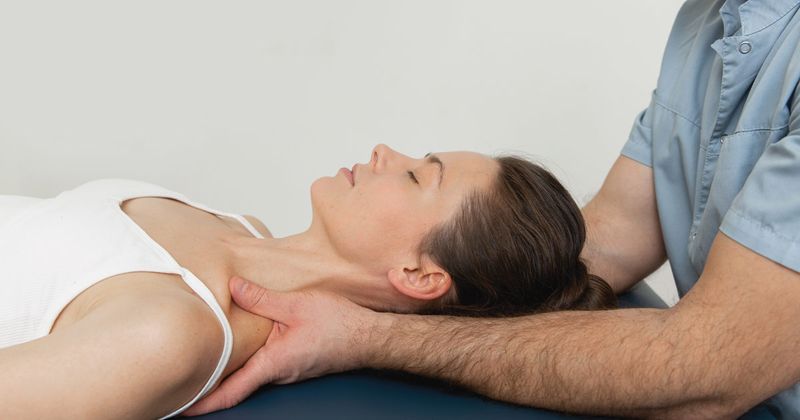
What is osteopathic manipulative treatment?
Osteopathic manipulative treatment, commonly called OMT, is a hands-on approach that osteopathic physicians may use as one part of evaluating and treating certain medical problems.
Doctors of Osteopathic Medicine, or DOs, are fully licensed physicians. Like MD physicians, DOs can diagnose medical conditions, prescribe medications, order testing, perform appropriate procedures, and practice throughout medical and surgical specialties.
Osteopathic medical training also includes additional education involving the musculoskeletal system and hands-on examination and treatment techniques.
At Firebird Direct Primary Care in Worthington, Ohio, Dr. Mark Hagen may incorporate OMT into primary care when it is appropriate for the patient's condition.
What happens during OMT?
OMT begins with an evaluation.
Before deciding whether hands-on treatment is appropriate, the physician considers the patient's symptoms, medical history, physical examination, and possible causes of the problem.
If OMT is appropriate, the physician may use different hands-on techniques involving muscles, joints, and other parts of the musculoskeletal system.
There is not one single OMT technique used for every patient.
The approach depends on what is found during the evaluation and what the physician is trying to address.
Is OMT the same as chiropractic treatment?
They are different healthcare professions and training pathways.
OMT is performed by osteopathic physicians as part of medical care. A DO's evaluation may also involve medications, laboratory testing, imaging, referrals, preventive care, and management of other medical conditions.
OMT may be one tool within that broader medical evaluation.
The important question for a patient is not simply which hands-on technique is being used, but whether the treatment is appropriate for the specific diagnosis and clinical situation.
What kinds of problems might be considered for OMT?
OMT is often associated with musculoskeletal complaints.
Depending on the individual patient and diagnosis, a physician may consider hands-on osteopathic treatment as part of the evaluation or management of certain problems involving:
- Back discomfort
- Neck discomfort
- Muscle tightness
- Joint or movement restrictions
- Selected musculoskeletal complaints
Not every case of back, neck, or joint pain is appropriate for OMT.
Similar symptoms can sometimes result from conditions that require imaging, medication, physical therapy, specialist evaluation, urgent care, or another treatment entirely.
That is why diagnosis comes before treatment.
Does OMT replace medication?
Not necessarily.
OMT and medication are not mutually exclusive.
For some problems, medication may be appropriate. For others, hands-on treatment, activity modification, exercise, physical therapy, or another approach may be considered.
Sometimes several approaches are used together.
The treatment plan should be based on the medical problem rather than on trying to make every condition fit one particular treatment.
Does OMT replace physical therapy?
No.
Physical therapy and OMT can serve different roles, and there are situations in which physical therapy may be the more appropriate treatment.
Physical therapists can provide structured rehabilitation, progressive exercise, strength training, mobility work, and other treatments over multiple visits.
A primary care physician can help determine whether OMT, physical therapy, home exercises, medication, imaging, specialty evaluation, or a combination of approaches makes sense.
Is OMT appropriate for every patient?
No.
A hands-on treatment should only be performed when it is appropriate for the patient's condition.
A person's age, medical history, symptoms, injuries, bone health, previous surgeries, medications, examination findings, and other factors can influence whether a particular technique should be considered.
Some symptoms also require additional evaluation before musculoskeletal treatment is appropriate.
What should I expect at an OMT visit?
The visit should begin much like other medical evaluations.
Your physician may ask about:
- Where the symptoms are located
- When they started
- What makes them better or worse
- Previous injuries
- Weakness or numbness
- Medications
- Previous treatments
- Other medical conditions
- Symptoms that could suggest a more serious problem
A physical examination can then help determine whether OMT is reasonable and which techniques, if any, might be appropriate.
Why offer OMT in a primary care practice?
Musculoskeletal complaints are common in family medicine.
Having OMT available gives an osteopathic family physician another potential treatment option after evaluating the patient.
It also allows the physician to consider the musculoskeletal complaint within the context of the patient's overall health.
For example, a new back problem may initially appear mechanical but still require consideration of medications, neurologic symptoms, previous disease, injury, or other possible causes.
The hands-on treatment is therefore only one part of the medical assessment.
When does pain need additional evaluation?
Some symptoms should not simply be treated as routine muscle or joint discomfort.
Depending on the situation, further evaluation may be needed for symptoms such as significant trauma, progressive weakness, new neurologic problems, fever with severe pain, unexplained weight loss, or other concerning findings.
The appropriate evaluation depends on the individual situation.
One benefit of receiving OMT from a physician is that the hands-on assessment occurs within a broader medical evaluation.
OMT and family medicine in Worthington, Ohio
Firebird Direct Primary Care provides physician-led family medicine in Worthington for patients from Worthington, Columbus, and surrounding Central Ohio communities.
As a Doctor of Osteopathic Medicine, Dr. Mark Hagen can incorporate OMT when it is appropriate while also providing the broader evaluation and ongoing care expected from a family physician.
OMT is not the answer to every musculoskeletal problem.
It is another tool that may be useful when the diagnosis, examination, and individual patient's circumstances support its use.
Explore primary care services at Firebird DPC, learn more about Dr. Mark Hagen and Firebird DPC, or review Firebird DPC membership.